

Embark on a journey through the world of stucco and siding houses, where traditional charm meets modern elegance. Discover the allure of these architectural elements that have stood the test of time, adding character and sophistication to any home.
Learn about the different types of finishes, materials used, installation processes, and maintenance tips to keep your stucco and siding house looking pristine for years to come.
Introduction to Stucco and Siding Houses
Stucco and siding houses are popular choices for exterior finishes in modern architecture. Stucco is a durable and versatile material made from cement, sand, and water, applied in layers to create a smooth finish. On the other hand, siding refers to a variety of materials such as vinyl, wood, or fiber cement panels that are installed on the exterior of a house.Stucco and siding provide several benefits for house exteriors.
They offer protection against the elements, including rain, wind, and UV rays, helping to insulate the home and reduce energy costs. Additionally, stucco and siding require minimal maintenance compared to other exterior finishes, making them a cost-effective option for homeowners.The popularity of stucco and siding houses in modern architecture can be attributed to their aesthetic appeal and versatility.
Stucco comes in a wide range of colors and textures, allowing homeowners to customize the look of their home. Siding also offers a variety of options, from traditional wood siding to modern vinyl panels, giving homeowners flexibility in design choices.
Benefits of Stucco and Siding Houses
- Enhanced durability and weather resistance
- Energy efficiency and insulation
- Low maintenance requirements
- Aesthetic versatility and customization options
Types of Stucco Finishes
Stucco finishes are essential for adding texture and visual appeal to stucco houses. There are various types of stucco finishes, each with its own characteristics and durability.
Smooth Finish
A smooth finish is achieved by applying a thin layer of stucco and then troweling it to create a flat, polished surface. This finish offers a sleek and modern look, making it popular for contemporary homes. However, smooth finishes may show cracks more easily compared to other finishes.
Sand Finish
A sand finish involves mixing fine sand particles into the stucco mixture before application. This finish provides a subtle texture and is more forgiving when it comes to hiding imperfections or cracks. Sand finishes are versatile and can complement various architectural styles.
Dash Finish
A dash finish incorporates small pebbles or aggregate into the stucco mix, giving the surface a rough and textured appearance. This finish is highly durable and can withstand harsh weather conditions. Dash finishes are commonly used for traditional or rustic-style homes.
Types of Siding Materials
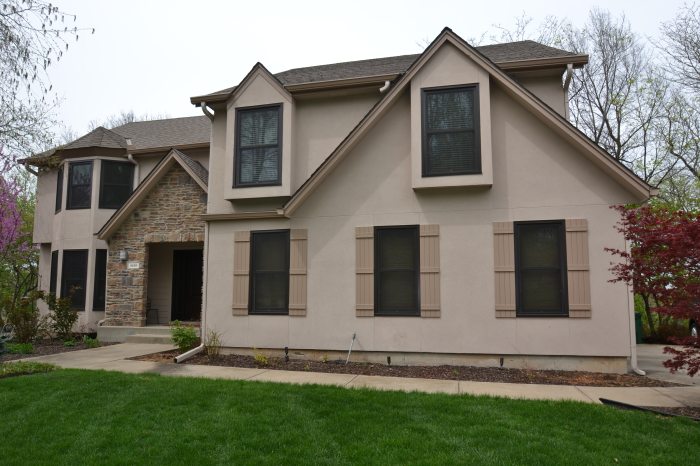
Vinyl, wood, fiber cement, and metal are common siding materials used in construction. Each material has its own set of advantages and disadvantages in terms of durability and maintenance.
Vinyl Siding
- Pros: Affordable, low maintenance, versatile in design options.
- Cons: Prone to cracking or fading over time, limited color choices.
Wood Siding
- Pros: Natural aesthetic appeal, environmentally friendly.
- Cons: Requires regular maintenance like painting or staining, susceptible to rot or insect damage.
Fiber Cement Siding
- Pros: Durable, fire-resistant, low maintenance, rot-resistant.
- Cons: Higher initial cost, heavy and challenging to install.
Metal Siding
- Pros: Extremely durable, resistant to fire, insects, and rot.
- Cons: Can dent or scratch easily, may require repainting over time.
Installation Process of Stucco
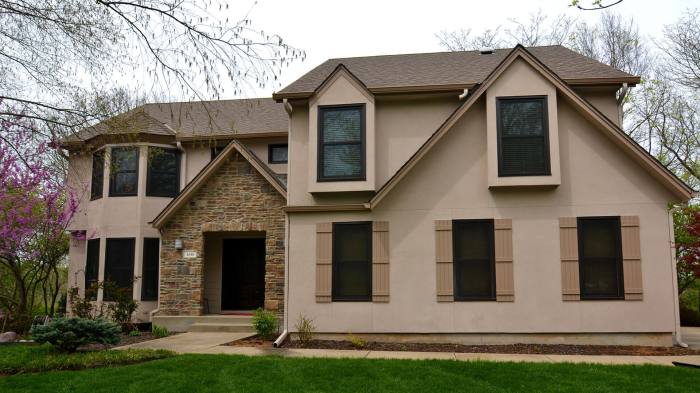
When it comes to installing stucco on a house, there are several key steps involved to ensure a successful application. Proper preparation of the surface, layering of the stucco, and finishing touches are all crucial aspects of the installation process.
Preparation of the Surface
Before applying stucco, it is essential to prepare the surface properly. This involves cleaning the surface thoroughly to remove any dirt, debris, or loose paint. Any cracks or damaged areas should be repaired, and a moisture barrier should be applied to prevent water infiltration.
Application of Stucco Layers
- First, a scratch coat is applied to the surface, creating a rough texture for better adhesion of the subsequent layers.
- Next, a brown coat is applied, providing additional strength and thickness to the stucco surface.
- Finally, the finish coat is applied, which determines the final texture and appearance of the stucco.
Finishing Touches
After applying the stucco layers, finishing touches are added to complete the installation process. This may include scoring the surface for a decorative finish, smoothing out any imperfections, and applying a sealant to protect the stucco from the elements.
Maintenance and Repair of Stucco and Siding
Regular maintenance for stucco and siding houses is crucial to ensure their longevity and aesthetic appeal. By following proper cleaning and maintenance routines, homeowners can prevent costly repairs and preserve the beauty of their exteriors for years to come.
Tips for Cleaning and Maintaining Stucco and Siding
- Regularly wash stucco and siding with a gentle cleanser and water to remove dirt, mold, and mildew buildup.
- Inspect for cracks or damage and repair them promptly to prevent water infiltration and further deterioration.
- Trim vegetation near the house to prevent damage from overgrowth and maintain proper ventilation.
- Apply a fresh coat of paint or sealant as needed to protect the surfaces from the elements and UV rays.
Common Issues and Repair Methods
- Cracks:Fill small cracks with caulk or patching compound, and hire a professional for larger or structural cracks.
- Mold and Mildew:Use a mixture of water and bleach to clean affected areas, and improve ventilation to prevent future growth.
- Water Damage:Address leaks and fix damaged flashing or gutters to prevent water from seeping behind the stucco or siding.
- Peeling Paint:Scrape off loose paint, sand the surface, and apply a new coat of paint to protect the exterior.
Epilogue
As we conclude our exploration of stucco and siding houses, we invite you to embrace the beauty and versatility of these timeless exterior options. Whether you're drawn to the classic appeal of stucco or the versatility of siding, incorporating these elements into your home can truly elevate its aesthetic appeal.
Helpful Answers
How long does stucco typically last?
With proper maintenance, stucco can last anywhere from 50 to 80 years, making it a durable and long-lasting option for house exteriors.
Is siding a good option for homes in areas with extreme weather conditions?
Yes, certain types of siding like fiber cement are highly resistant to harsh weather elements, making them suitable for homes in extreme weather conditions.
Can I paint over my existing stucco or siding?
Yes, both stucco and siding can be painted to refresh their appearance or change the color scheme of your home. Make sure to use paint specifically designed for exterior surfaces.